
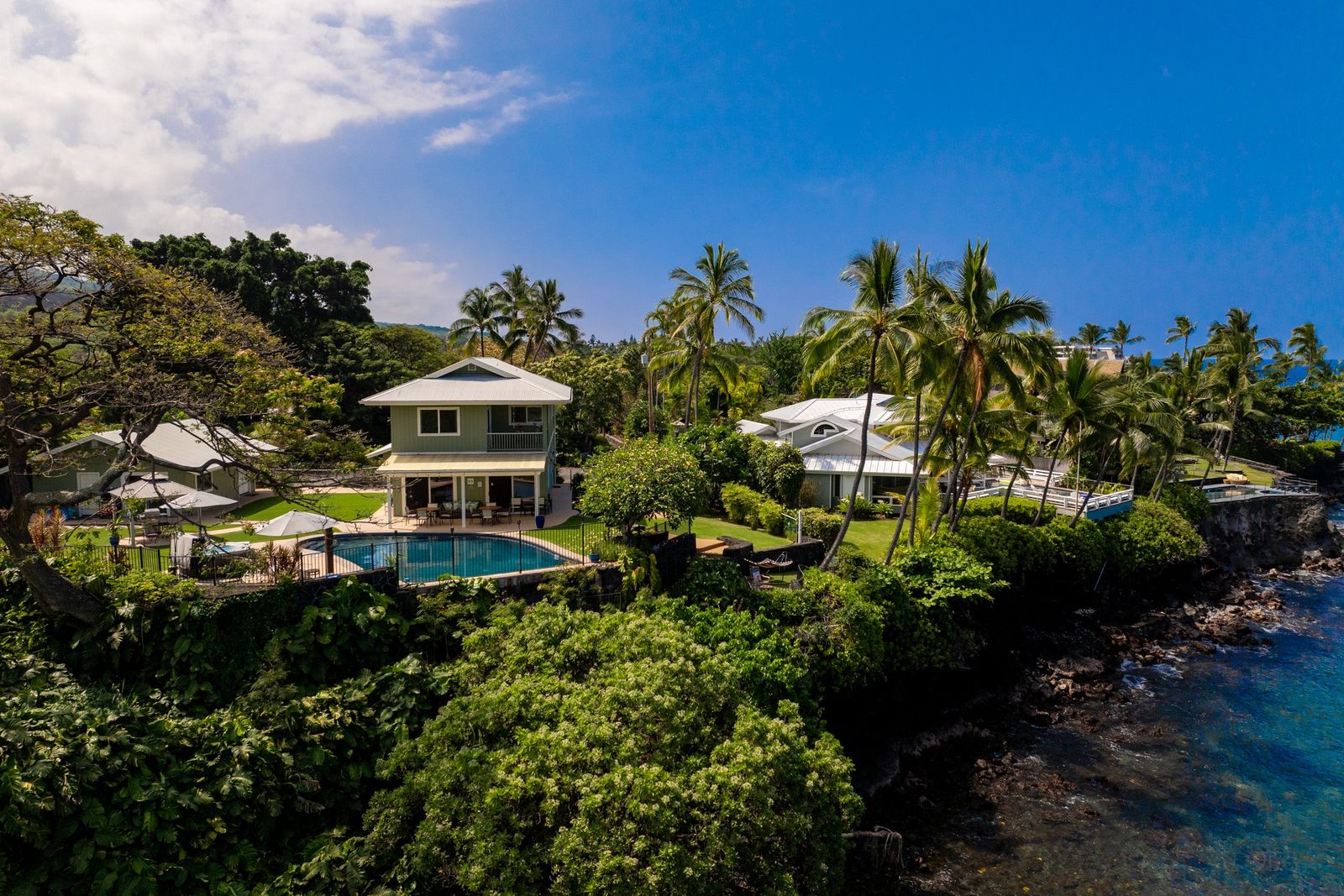
Every Hawaiian island has a following. The Big Island tends to win when a Buyer's list includes several of these at once:
The Big Island is not the right fit for everyone. Buyers who want a large city, a dense restaurant scene, or the most flight options in the state often look at Oʻahu. Marco is happy to say so when that is the honest answer.
Marco publishes monthly market reports based on Hawaii Information Service (HIS) data. In August 2026, Kailua-Kona recorded 36 single-family sales, up 50% from a year earlier, with a median price of $1,062,000 and a median of 32 days on market. The Kohala Coast resort communities sit well above those medians. See the August 2026 Hawaiʻi Island market update for the full breakdown, and current properties for what is available now.
These guides are organized by what a Buyer needs, not by who they are. Pick the one closest to your situation:
Hawaiʻi County taxes a primary residence far more lightly than a second home. Second homes over $2 million and $4 million now carry higher tiered rates.
| Hawaiʻi County class (FY 2026–27) | Rate per $1,000 of assessed value |
|---|---|
| Homeowner (your primary residence, with the home exemption) | $5.75 |
| Residential, not owner-occupied: first $2 million | $11.10 |
| Residential, not owner-occupied: portion from $2 million to $4 million | $14.50 |
| Residential, not owner-occupied: portion above $4 million (new tier) | $17.00 |
| Long-term rental | $7.75 |
| Hotel and resort | $11.55 |
| Agricultural and native forest | $9.35 |
Rates adopted by the Hawaiʻi County Council for fiscal year 2026–27 (July 1, 2026 to June 30, 2027), as reported by Big Island Now. Taxes are based on the county's assessed value, not the purchase price. Confirm current rates and your classification with the Hawaiʻi County Real Property Tax Office.
More detail: Hawaiʻi property tax guide for Kona Buyers, property tax for non-residents, and the new luxury tier.
The U.S. Geological Survey maps the island into lava flow hazard zones from 1 (highest) to 9 (lowest). The highest-hazard zones are concentrated on the active rift zones of Kīlauea and Mauna Loa, largely in Puna, Kaʻū, and parts of South Kona. Kailua-Kona, Holualoa, and the Kohala Coast resort corridor are generally in lower-hazard zones, but the zone is specific to each parcel and affects insurance. Check it for every property.
Some homes are on county sewer, others on septic or cesspools. Hawaiʻi law requires cesspools statewide to be upgraded or converted by 2050, so Buyers should know which system a property has. Most luxury properties are fee simple, but some Hawaiʻi properties are leasehold. Confirm tenure, water source, and zoning before you commit.
Hawaiʻi County requires short-term vacation rentals to be registered. In most residential zones, new vacation rentals are not allowed unless the property already holds a nonconforming use certificate; resort-zoned and certain other districts are treated differently. Never assume a home can be rented nightly. See buying a Kona vacation rental.
The Buyers who settle in best here are the ones who invest in the community: hiring local, supporting Hawaiian cultural and land stewardship organizations, and learning the history of the ʻāina (land) they now care for. That idea of kuleana, responsibility, runs through island life.
Marco A. Silva is a Kona-based broker with Coldwell Banker Island Properties and a Certified Luxury Home Marketing Specialist, with 19 years serving Kona and the Kohala Coast. He represents Buyers and Sellers across Hawaiʻi Island and works alongside Hawaiʻi attorneys, CPAs, lenders, and escrow officers so clients get specialist answers to specialist questions. Contact Marco to talk through your plans.
For Buyers who want land, privacy, a dry and sunny climate, resort-community amenities, and nonstop mainland flights, the Kona side of Hawaiʻi Island is one of the strongest options in the state. North Kona and the Kohala Coast hold most of the island's luxury homes, including the resort communities of Hualālai, Kūkiʻo, Kohanaiki, Mauna Lani, and Mauna Kea.
Most luxury purchases happen in North Kona (Kailua-Kona, Keauhou, Holualoa) and on the Kohala Coast, home to resort communities such as Hualālai, Kūkiʻo, Kohanaiki, Mauna Lani, and Mauna Kea. Some Buyers choose upcountry acreage in Holualoa or Waimea for privacy and a cooler climate.
Kona International Airport (KOA) has nonstop flights to major West Coast cities, including San Francisco, San Jose, Los Angeles, San Diego, Seattle, and Portland, plus year-round or seasonal service to other mainland hubs and Vancouver. Routes change by season, so check current airline schedules.
For fiscal year 2026–27, Hawaiʻi County taxes non-owner-occupied residential property at $11.10 per $1,000 of assessed value on the first $2 million, $14.50 on the portion from $2 million to $4 million, and $17.00 on the portion above $4 million. A primary residence with the home exemption is taxed at $5.75 per $1,000. Confirm current rates with the county.
It is strongly recommended for any significant purchase. Hawaiʻi has its own conveyance tax, HARPTA withholding on future sales by non-residents, county property tax classes, and zoning rules. A Hawaiʻi real estate attorney and CPA can advise on ownership structure and taxes. Marco is a real estate broker, not a tax or legal advisor, and can introduce you to professionals he works with.
Last reviewed October 15, 2026 by Marco A. Silva, Coldwell Banker Island Properties (RB-20599). Information is believed reliable but not guaranteed, and laws, tax rates, and flight schedules change. This page is general information, not tax, legal, lending, or investment advice.
Hawaiʻi Island Buyer Guides