
Important Note: This blog post is for informational purposes only and does not constitute legal, tax, or financial advice. Hawaii property tax rules, conveyance tax rates, and withholding requirements are subject to change and vary based on individual circumstances. Buyers and Sellers should consult a qualified Hawaii real estate attorney, CPA, or tax advisor before making decisions based on any information contained here.
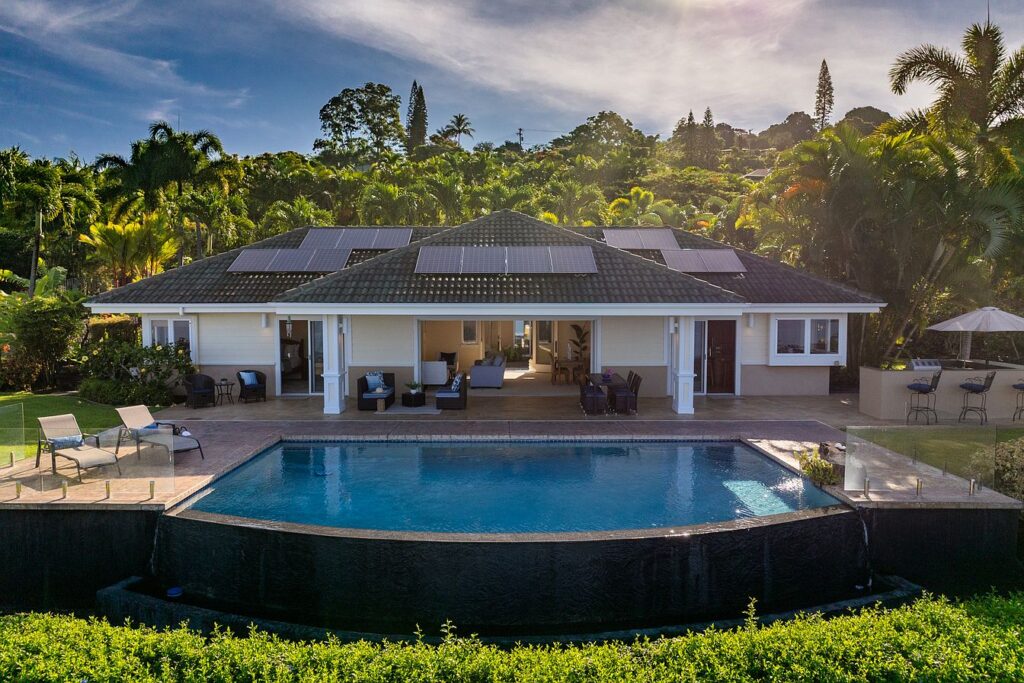
Property taxes in Hawaiʻi have long been among the lowest in the United States. That dynamic is shifting, particularly for luxury second homes, and Buyers exploring the Kona and Kohala Coast real estate market should understand what is changing and why.
Updated October 28, 2026 with the rates adopted for fiscal year 2026–27.
Hawaiʻi County has adopted a new third tier of residential property taxation for the portion of a home's value above $4 million when the home is not an owner-occupied primary residence. The County Council passed the tier in March 2026 and set its rate at $17.00 per $1,000 in May 2026, effective for the 2026–27 fiscal year that began July 1, 2026. It is a meaningful shift in how the county approaches luxury real estate. Reporting from Hawaiʻi Public Radio and Big Island Now have tracked this change closely.
Hawaiʻi County taxes a primary residence that qualifies for the home exemption far more lightly than a second home or investment property. Non-owner-occupied residential property is taxed in tiers, with each rate applying only to the portion of value within its band, according to reporting from Big Island Now on the rates the County Council adopted for fiscal year 2026–27.
| Hawaiʻi County class (FY 2026–27) | Rate per $1,000 of assessed value |
|---|---|
| Homeowner (primary residence with the home exemption) | $5.75 |
| Residential, not owner-occupied: first $2 million of value | $11.10 |
| Residential, not owner-occupied: portion from $2 million to $4 million | $14.50 |
| Residential, not owner-occupied: portion above $4 million (new Tier 3) | $17.00 |
| Long-term rental | $7.75 |
These rates remain low by national standards, but the gap between a primary residence and a second home is now wide, and it grows with value.
For context, a $3 million non-owner-occupied home would be taxed about $22,200 on its first $2 million and $14,500 on the next $1 million, roughly $36,700 a year. The same home as a qualifying primary residence would be taxed about $17,250 before the home exemption amount.
The new third tier applies to the portion of a non-owner-occupied residential property's value above $4 million, at $17.00 per $1,000. The County Council passed the tier in March 2026, as Big Island Now reported, and adopted the $17.00 rate along with the rest of the 2026–27 schedule in May 2026. At the same time, the rate on the $2 million to $4 million band rose from $13.60 to $14.50, and the homeowner rate fell from $5.95 to $5.75.
On a $5 million second home, that works out to roughly $22,200 on the first $2 million, $29,000 on the next $2 million, and $17,000 on the final $1 million, about $68,200 a year before any exemptions.
Buyers considering properties at or above the $4 million threshold, including resort community estates on the Kohala Coast and premium oceanfront properties in Kailua-Kona, should factor this higher annual carrying cost into their purchase analysis, and watch for future rate changes, which the County sets each year.
Critically, primary residences are excluded from the new tier. A Buyer who purchases a $4 million or $5 million property as their principal home and successfully files for the county homeowner's exemption would be taxed at the $5.75 homeowner rate instead.
The $4 million threshold places this new tier squarely in territory relevant to a meaningful portion of the luxury second-home market on the Big Island, particularly properties within the major resort communities of the Kohala Coast. For Buyers operating below $4 million, including the majority of properties currently active in the Kailua-Kona, North Kona, and Holualoa markets, the new third tier does not apply, although the second-home rates of $11.10 and $14.50 do. Explore current properties on the Marco In Kona active properties page.
Property tax implications should be part of every informed purchase decision in the luxury market. Marco A. Silva encourages all Buyers to work with a qualified Hawaii real estate attorney and CPA to understand how current tax rules apply to their specific situation. To explore active properties and discuss how property tax considerations apply, connect with Marco A. Silva directly.
Big Island Now: 'Hawaiʻi County property tax rates set for upcoming 2026-27 fiscal year'
Hawaiʻi Public Radio: 'Ultra luxury Hawaiʻi Island homes could get separate property tax tier'
Big Island Now: 'Proposed new Hawaiʻi County tax rate for luxury second homes passes first reading'
Abode2: 'Hawaii Moves Toward New Luxury Property Levies'
What are the current Hawaiʻi County residential property tax rates?
For fiscal year 2026–27, a primary residence with the home exemption is taxed at $5.75 per $1,000 of assessed value. Non-owner-occupied residential property, including second homes and investment properties, is taxed at $11.10 per $1,000 on the first $2 million of value, $14.50 on the portion from $2 million to $4 million, and $17.00 on the portion above $4 million. Long-term rentals are taxed at $7.75. Rates are set each year, so verify current rates with Hawaiʻi County directly.
What is the new third-tier property tax in Hawaiʻi County?
Hawaiʻi County adopted a third tier of $17.00 per $1,000 for the portion of a non-owner-occupied residential property's value above $4 million, effective for fiscal year 2026–27. It does not apply to owner-occupied primary residences that qualify for the county home exemption.
Does the new luxury property tax tier affect all Big Island home purchases?
No. The third tier applies only to the value above $4 million on non-owner-occupied residential property. Properties valued below $4 million and owner-occupied primary residences that qualify for the home exemption are not affected by it, though second homes below $4 million are still taxed at the $11.10 and $14.50 rates.
How does the homeowner's exemption affect property tax rates on the Big Island?
Qualifying for the Hawaiʻi County homeowner's exemption places an owner-occupied primary residence in the Homeowner class, taxed at $5.75 per $1,000 for 2026–27, and also reduces the taxable value by the exemption amount. Eligibility requires using the property as a principal home and filing with Hawaii County within the required deadline. Buyers should consult Hawaii County and a local attorney to confirm eligibility for their specific situation.
How do I learn more about how property taxes affect a specific listing I am considering?
Contact Marco A. Silva through marcoinkona.com/contact to discuss specific properties and work through tax considerations with appropriate professional advisors as part of your due diligence process.
Important Note: This blog post is for informational purposes only and does not constitute legal, tax, or financial advice. Hawaii property tax rules, conveyance tax rates, and withholding requirements are subject to change and vary based on individual circumstances. Buyers and Sellers should consult a qualified Hawaii real estate attorney, CPA, or tax advisor before making decisions based on any information contained here.