
Important: This post is for informational purposes only and does not constitute financial, tax, investment, or legal advice. Interest rate figures referenced are based on publicly available national averages as of mid-to-late 2026 and are subject to change. Buyers should consult a qualified financial advisor, mortgage professional, and Hawaii real estate attorney before making any purchase decision.
Most real estate markets are ultimately constrained by political decisions, not physical ones. Zoning can be changed. Density can be increased. More units can be permitted. The scarcity in most American real estate markets is a function of regulatory choices that can, in theory, be unmade.
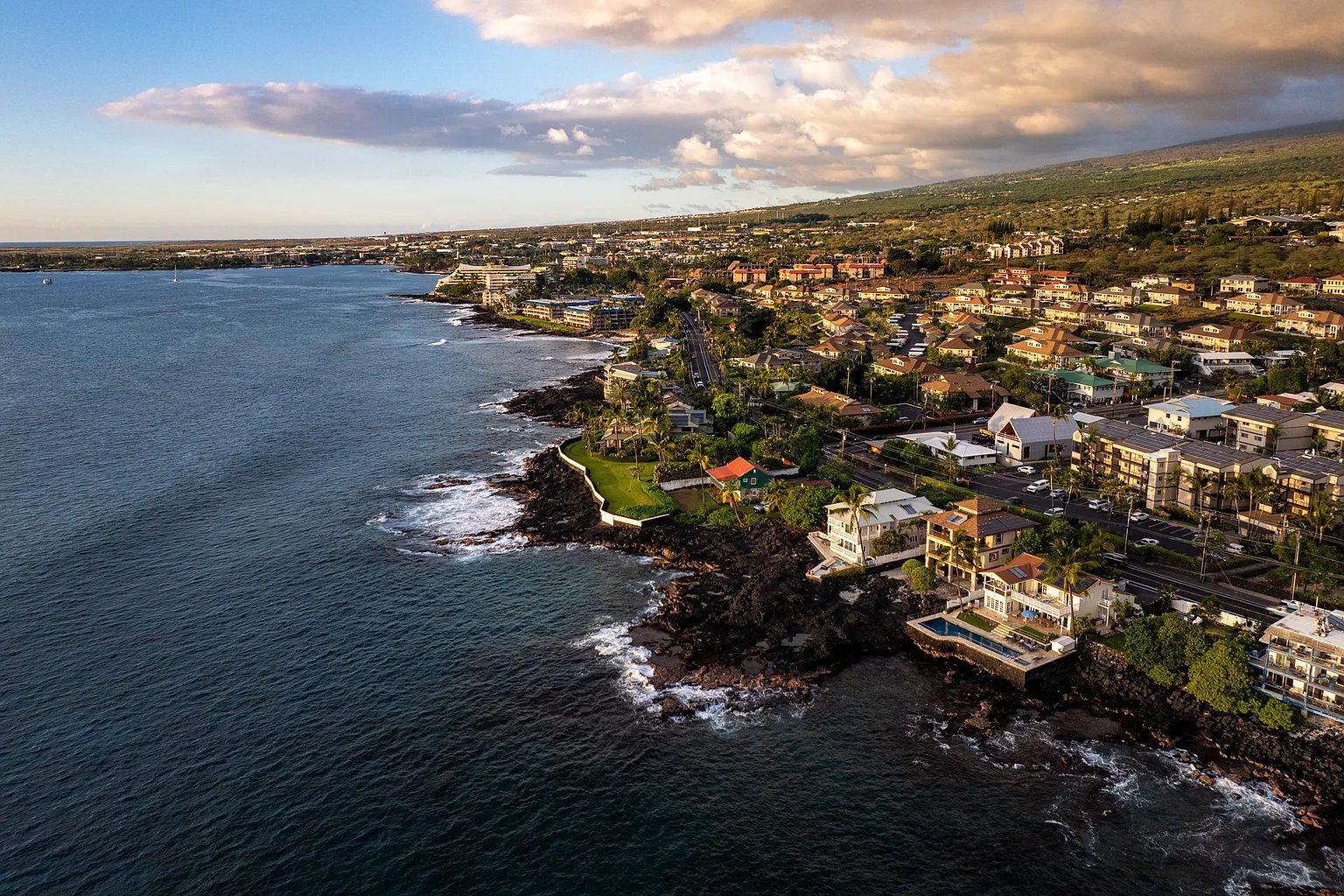
The Big Island of Hawaiʻi is different. It is an island. The total land mass is finite. The Kohala Coast, which hosts the premium resort communities, is a specific 40-mile stretch with specific geological character, specific weather patterns, and specific resort infrastructure that took decades to build. You cannot move it. You cannot replicate it. Hawaii’s land use framework, which includes strong protections for agricultural and conservation land, means that the supply of resort-designated residential property is not simply a function of developer interest. It is bounded by the physical and regulatory character of the place itself.
That structural scarcity is not a marketing claim. It is a physical and regulatory reality. The same land protections that make luxury supply constrained also reflect Hawaii’s commitment to preserving its natural and agricultural landscape. For Buyers, this means they are purchasing in a market where values have been supported through multiple economic cycles, including the financial crisis of 2008 to 2010 and the pandemic disruption of 2020.
The current market data confirms this scarcity in real-time. New single-family listings in North Kona fell 27% year over year in June 2026. New listings in South Kohala fell in the same period while single-family prices rose 11% year over year. Island-wide new single-family listings fell 22% year over year in June 2026. These are not temporary disruptions. They reflect a structural dynamic where the number of owners willing to sell is consistently constrained relative to the number of serious Buyers.
In a market with genuine scarcity, the properties that are worth owning tend to hold their value over time because of the straightforward relationship between limited supply and sustained demand. The Big Island is a place where people choose to be for genuine reasons, and that choice reflects the character of the island itself as much as any investment thesis.
For Buyers whose wealth is concentrated in AI or tech equity, the Big Island luxury market offers a specific portfolio feature: non-correlation. As The Agency’s 2026 research notes, AI wealth Buyers are deploying into real estate as a diversification from concentrated equity positions. That observation describes a sound portfolio logic. A $4 million position in a Kohala Coast resort property does not trade on the Nasdaq. It does not lose value in a single session because of an earnings miss or a competitive announcement. Its value is derived from its physical characteristics, its location, its scarcity, and the sustained demand of the market that prices it.
This does not mean real estate is risk-free. It is illiquid, it carries transaction costs, and market conditions do affect values over time. But for a Buyer who already has significant exposure to the volatility of growth equity and is looking for a store of value that also provides a usable asset, a well-positioned Big Island luxury property offers a meaningfully different risk profile.
In July 2026, Howard Schultz’s estate at Hualalai Resort sold for $36 million in an off-market transaction, setting a new residential record for the community. The Buyer already owned in the resort and wanted a larger position. That is not the behavior of someone hedging uncertainly. It is the behavior of someone who has concluded that deepening their position in this specific market is the right move.
Between 2021 and 2025, the Kailua-Kona area recorded approximately 82 transactions above $10 million, nearly double the comparable figure for Wailea on Maui. The depth of the Big Island luxury market is not a recent development. It is a sustained pattern that reflects the specific combination of scarcity, quality, and location that this market offers.
Timing any market is difficult. Timing a market with structural scarcity and constrained new supply is particularly difficult, because the specific property that is right for a Buyer may not be available when rates normalize or when portfolio conditions improve. The Buyers who have consistently succeeded in the Big Island luxury market are those who acted when the right property appeared, rather than those who waited for perfect conditions.
In the current environment, with supply constrained, prices stable to modestly rising in premium districts, and the market attracting serious Buyers at every level from North Kona single-family to Kohala Coast resort estates, the right move for a Buyer who has been considering the Big Island is to get informed, get positioned, and be ready to act with confidence when the right property appears.
Marco A. Silva is a member of REALM Global, the invitation-only network for the top 1% of luxury real estate professionals worldwide, with access to 6.8 million affluent individual profiles and a connected network across 40 states and 16 countries. His knowledge of the Big Island luxury market is deep and current. Connect with Marco for a conversation about what the market offers right now, or explore active properties at marcoinkona.com/active. Learn more about the communities he works in at marcoinkona.com/communities.
Why is the Big Island luxury real estate market considered scarce?
The Big Island is a finite island. The Kohala Coast resort corridor, which hosts the premium communities of Hualalai, Mauna Lani, Mauna Kea, Kukio, and Kohanaiki, occupies a specific 40-mile stretch of coastline with geological, weather, and resort infrastructure characteristics that cannot be replicated or meaningfully expanded. Hawaii’s land use regulations further constrain the development of new resort-scale communities. This physical and regulatory scarcity supports long-term value.
How has Big Island luxury real estate performed through past economic downturns?
The Big Island luxury market has shown meaningful resilience through prior economic disruptions, supported by its structural supply constraints and sustained international Buyer demand. Individual property performance varies significantly by location, community, and price point. Buyers should review historical comparable sales with Marco A. Silva as part of their due diligence.
Is Big Island luxury real estate a good inflation hedge?
Physical real property in a supply-constrained market with sustained Buyer demand has historically tracked broad inflation over long holding periods. The Big Island’s structural supply constraints and the sustained international demand base for its premium properties provide additional support for this characteristic. This is not a guarantee of performance; consult a qualified financial advisor.
What is the typical holding period for Big Island luxury investment properties?
Big Island luxury properties are typically held for multi-year to multi-decade periods, reflecting both the transaction costs of real estate and the lifestyle use that makes these properties valuable. Short-term trading is not a primary use case for this market. Buyers with investment goals should model holding periods and exit scenarios with their financial advisor.
What makes the Big Island luxury market different from other Hawaii islands as an investment?
Between 2021 and 2025, Kailua-Kona recorded approximately 82 transactions above $10 million, nearly double the comparable figure for Wailea on Maui. The Big Island offers more resort community diversity, larger parcel sizes, a more varied price range for luxury properties, and a sustained depth of demand that reflects both the scale of the island and the breadth of its resort infrastructure. Contact Marco A. Silva for a current market comparison.
Keep Reading